Drew Flores · 25 September 2026
Simulated Lunar Gravity Chambers Unlock Plant Adaptations That Could Anchor Future Outpost Agriculture
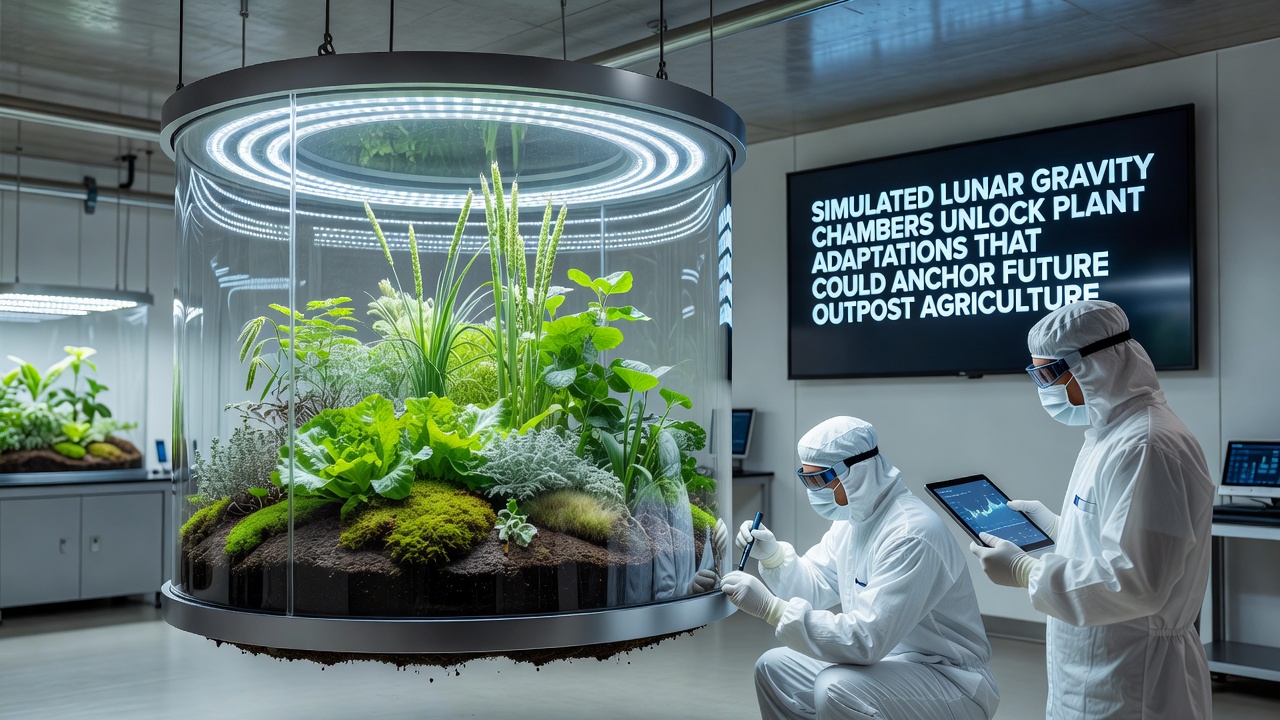
Simulated lunar gravity chambers have emerged as key tools in plant biology research, where teams adjust rotational forces and magnetic fields to replicate the Moon's one-sixth Earth gravity environment, and scientists track how crops like wheat, lettuce and potatoes modify root structures along with nutrient uptake patterns under these conditions. Data from multiple facilities show that plants develop denser root networks and altered leaf orientations when exposed to sustained low-gravity simulations, adaptations that could support sustained food production at future lunar bases.
Equipment in these chambers combines centrifuges with clinostats to maintain precise gravity levels while monitoring variables such as water distribution in soil substrates and gas exchange rates, and researchers at institutions across North America and Europe have documented consistent changes in gene expression related to cell wall formation and hormone signaling. Studies released in early 2025 indicate that certain cultivars achieve comparable biomass yields to Earth controls after several growth cycles, although germination timing shifts by several days in most trials.
Chamber Design and Operational Methods
Facilities in Germany and Canada operate chambers that spin plant trays at calculated speeds to produce effective lunar gravity, while integrated sensors record real-time adjustments to temperature, humidity and light spectra that mimic the lunar day-night cycle. Engineers calibrate each run to avoid Coriolis effects that might distort plant tropisms, and protocols require repeated validation against parabolic flight data collected by NASA and ESA teams. Results demonstrate that root elongation accelerates initially but stabilizes as plants acclimate, allowing predictable harvest schedules once varieties are selected for consistency.
Substrate experiments compare lunar regolith simulant mixed with organic amendments against hydroponic systems, and findings reveal that mycorrhizal fungi partnerships enhance phosphorus absorption under reduced gravity, a factor that could reduce fertilizer transport needs for outpost missions. Teams log these interactions through automated imaging systems that capture daily growth metrics, producing datasets shared among international partners for cross-validation.
Observed Plant Adaptations Across Species
Wheat varieties tested in Australian and Japanese laboratories display increased tillering and modified stomatal density when grown in lunar gravity simulators, traits that improve water-use efficiency according to measurements taken over multiple generations. Lettuce trials conducted at a U.S. university facility show compact leaf arrangements that maintain photosynthetic output despite lower light intensity, while potato tubers form at shallower depths in the growth medium, easing mechanical harvesting in confined habitats.
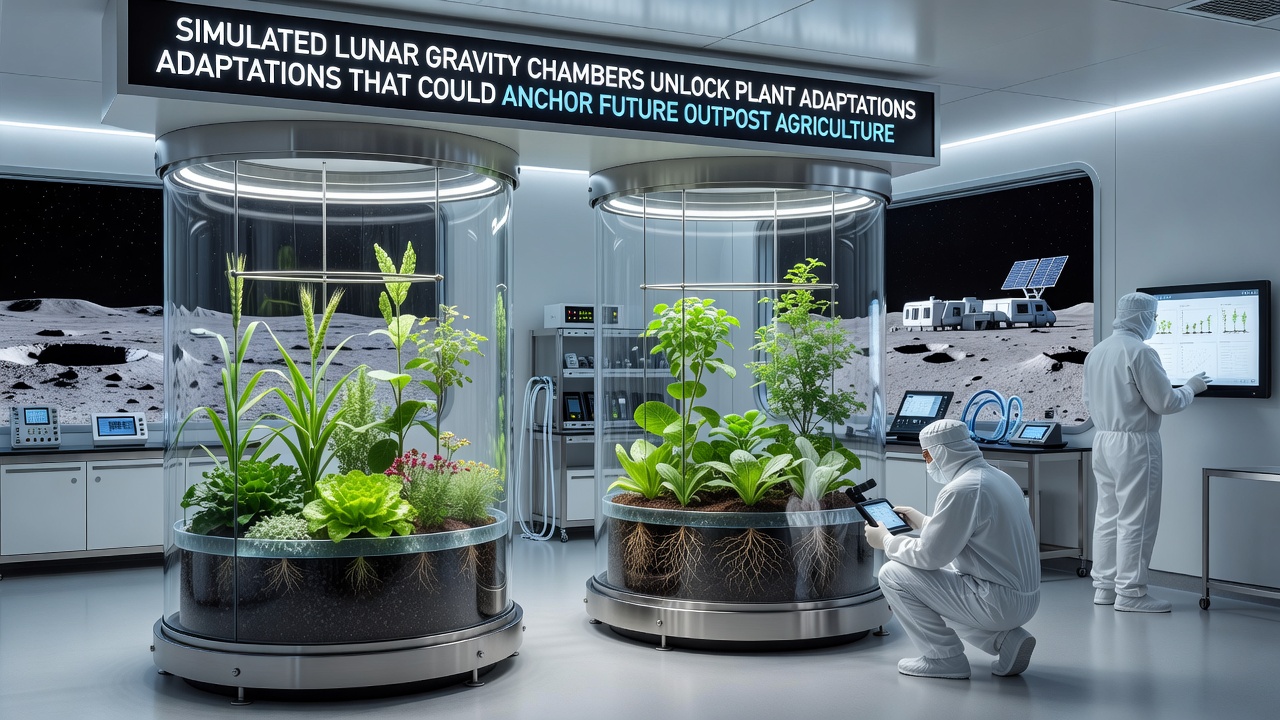
Genetic analysis performed at European centers identifies upregulated expression of genes tied to auxin transport and cell elongation, and these molecular shifts correlate with physical changes visible in cross-sectioned samples. Observers note that some plants recover normal morphology within one or two generations after return to standard gravity, suggesting reversible adaptations that support flexible mission planning.
Integration with Lunar Outpost Planning
Agencies including the Canadian Space Agency and the European Space Agency have incorporated plant chamber data into habitat design reviews scheduled for September 2026, where engineers will evaluate module layouts that accommodate rotating growth units alongside life-support systems. Projections based on current yields estimate that a 20-square-meter cultivation area could supply a four-person crew with fresh vegetables after initial setup, reducing reliance on resupply missions from Earth.
Power requirements for chamber operation remain a focus, since continuous rotation demands reliable solar arrays or nuclear sources, and thermal management must account for the Moon's extreme temperature swings. Research groups continue testing closed-loop water recycling that pairs with plant transpiration, an approach that aligns with broader resource utilization strategies outlined in recent mission roadmaps.
Future Research Directions and Collaborations
Upcoming experiments will extend simulation durations beyond six months to assess cumulative effects on seed viability and nutritional content, and partnerships between academic labs in the UK and Australia aim to standardize measurement protocols across sites. Data from these efforts feed into modeling tools that predict crop performance under variable gravity gradients found at different lunar latitudes.
International workshops planned through 2026 will review combined results from gravity chambers and analog habitat tests, allowing mission planners to refine crop selection lists and growth schedules. Such coordination supports the development of resilient agricultural systems capable of operating with minimal crew intervention during extended stays.
Conclusion
Simulated lunar gravity research continues to map specific plant responses that directly inform agricultural infrastructure for permanent outposts, and the accumulated evidence from controlled trials provides a foundation for scaling production systems on the lunar surface. Continued data sharing among global teams strengthens the technical basis for self-sustaining food supplies that align with exploration timelines extending into the next decade.