Blake Hartmann · 2 September 2026
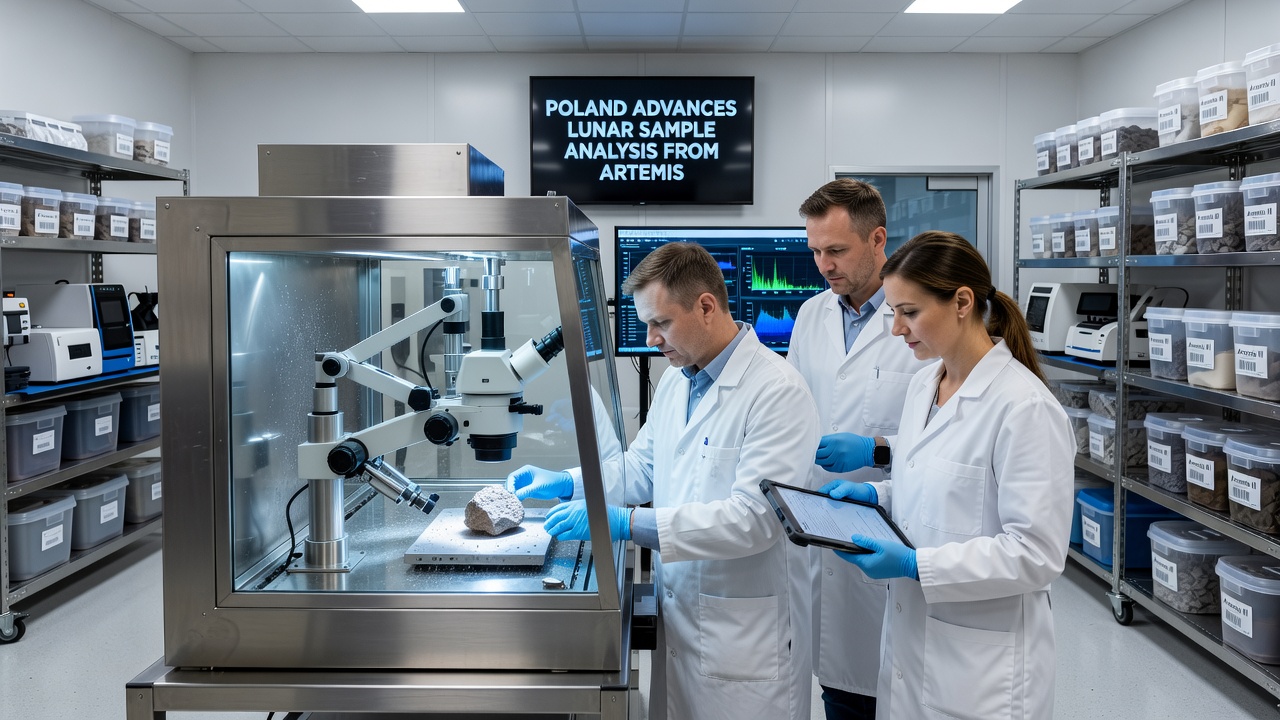
Poland is emerging as a leader in the analysis of lunar samples collected during the Artemis missions. The nation's research institutions have received allocations of these precious materials, enabling detailed studies that contribute to our knowledge of the Moon's history and resources. Polish experts are utilizing cutting edge technology to unlock secrets held in the lunar regolith.
Poland's Strategic Involvement in Artemis
Through agreements with NASA, Polish scientists participate in the analysis of regolith from the lunar south pole. This region is of high interest due to its potential for harboring water and other resources. The Polish Space Agency has invested in specialized equipment to handle and examine these samples without contamination. Teams are examining the chemical and isotopic compositions to understand volcanic activity and impacts on the lunar surface over billions of years. International cooperation has been key, with data exchanges facilitating breakthroughs in understanding lunar mantle dynamics. Polish contributions include modeling the distribution of volatiles and their implications for sustainable lunar bases. The country has a long history of space research dating back to the early days of satellite technology.
Technological Advances in Sample Examination
New techniques developed in Poland allow for non-destructive testing of samples using synchrotron radiation. This method provides high-resolution images of internal structures. Additionally, machine learning algorithms are being applied to interpret the vast datasets generated from the analyses. These innovations accelerate the pace of discovery and have applications beyond lunar science, including in terrestrial geology and materials science. Researchers are also focusing on the potential for helium-3 extraction from the samples, which could be a future energy source. The ongoing work underscores Poland's commitment to space exploration and positions the country to play a vital role in future international missions to the Moon and beyond. Educational initiatives are also underway to inspire the next generation of lunar scientists through university programs and public outreach events. Collaborative projects with European partners further enhance the capabilities and knowledge sharing in this field. Additional studies examine micrometeorite impacts preserved in the samples to refine models of solar system evolution.