Noah Keller · 2 September 2026
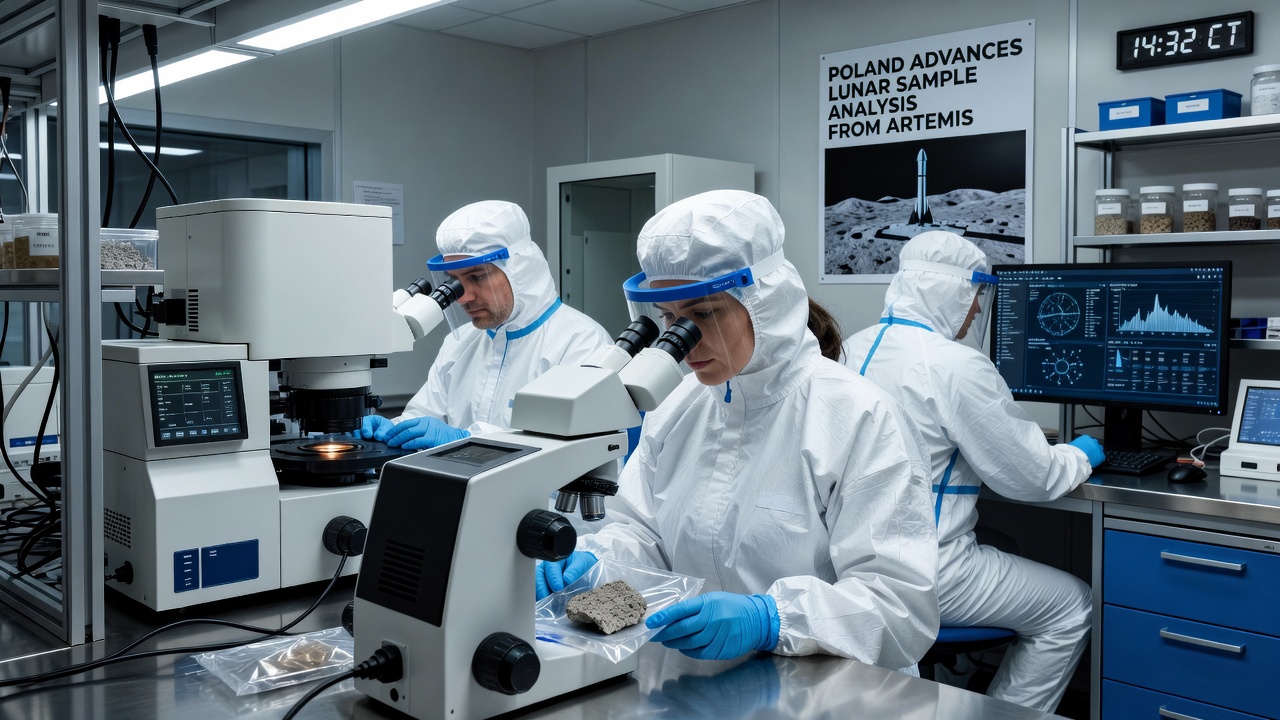
Poland has made significant strides in preparing for the analysis of lunar samples collected during NASA's Artemis missions. The Polish Space Agency, in collaboration with leading universities, is establishing specialized laboratories equipped with cutting-edge technology to examine these precious materials. This development positions Poland as a key player in international lunar research efforts. Scientists are focusing on understanding the Moon's volcanic history and resource potential through detailed geochemical studies.
Polish Research Facilities Prepare for Sample Analysis
The Institute of Geological Sciences at the University of Warsaw has invested in advanced analytical instruments including electron microprobes and isotope ratio mass spectrometers. These tools will allow scientists to determine the composition and age of lunar rocks with high precision. Researchers are also developing protocols for handling and storing samples to prevent contamination. Training programs have been initiated for young scientists to build expertise in extraterrestrial materials analysis. Partnerships with European space organizations ensure access to the latest methodologies in planetary science. Additional facilities in Krakow are being upgraded to handle high-resolution imaging and spectroscopic analysis of the samples.
Polish experts are also contributing to the development of new techniques for non-destructive testing of lunar materials. This includes the use of synchrotron radiation sources available through international networks. The goal is to maximize scientific return from the limited sample quantities allocated to each participating country.
International Collaboration in Lunar Exploration
Through agreements with NASA and the European Space Agency, Polish teams will receive portions of the Artemis samples for study. This collaboration facilitates knowledge exchange and joint publications on lunar geology and resource utilization. Poland's contributions include expertise in mineralogy and remote sensing data interpretation. Such efforts support broader goals of sustainable lunar exploration and potential future human presence on the Moon. The analysis is expected to yield insights into the Moon's formation and the solar system's history. Ongoing projects aim to integrate findings with data from previous missions like Apollo and Chang'e. Future plans involve developing robotic systems for in-situ analysis on the lunar surface.
Poland's involvement underscores the importance of European participation in Artemis program objectives. Educational initiatives are underway to inspire the next generation of space scientists. The country is also exploring applications of lunar research in terrestrial technologies such as advanced materials and energy storage.