Blake Hartmann · 9 October 2026
Aligning Global Timelines for Joint Lunar Outposts as Moon Rush Intensifies
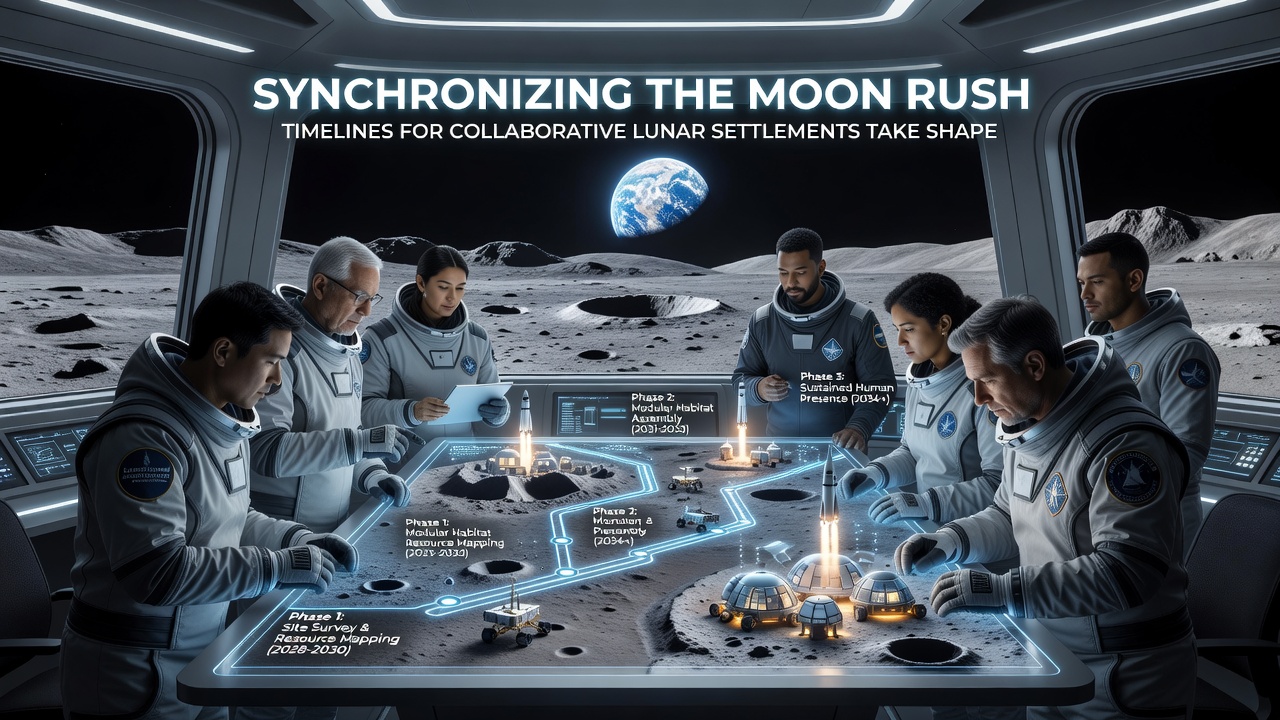
Space agencies and private partners continue to refine coordinated schedules for permanent lunar settlements, with multiple nations aligning construction phases, resource allocation, and infrastructure milestones through 2035. Data from ongoing Artemis program updates and parallel European and Asian initiatives show overlapping windows for habitat modules, power systems, and transport networks that reduce redundant launches while sharing technical standards.
Key Coordination Milestones Through 2026
Meetings scheduled for October 2026 in Europe bring together representatives from NASA, ESA, JAXA, and commercial entities to lock in joint delivery dates for the first multi-module outpost near the lunar south pole. Records indicate that preliminary agreements already set habitat deployment for late 2028, followed by crewed operations starting in 2029, with power grid expansion targeted for 2031. These dates emerged after analysis of launch manifests from multiple providers showed capacity for shared payloads rather than separate national missions.
Resource Sharing and Technical Standards
Agreements emphasize common docking interfaces, oxygen production methods, and radiation shielding materials so modules from different suppliers integrate without custom adapters. Figures released by ESA detail how standardized regolith sintering techniques cut construction time by 30 percent across partner sites, while NASA data tracks similar gains in solar array deployment rates. Observers note that such harmonization prevents the duplication that slowed earlier orbital station projects.
Private firms contribute specialized landers and rovers under contract, with timelines tied to the same 2028-2031 window. One study from an international research consortium revealed that staggered supply flights every four months maintain steady material flow without overwhelming any single launch provider. This approach builds on lessons from the International Space Station assembly sequence, where phased deliveries kept momentum even when individual components faced delays.

Regional Contributions and Overlapping Phases
North American teams focus on life-support recycling units scheduled for integration by mid-2029, whereas European partners prepare autonomous drilling rigs for water-ice extraction that begin operations in 2030. Asian agencies coordinate rover fleets for site mapping that feeds directly into the shared construction calendar. Reports from NASA mission updates list these elements as interdependent, meaning slippage in one area shifts the overall sequence for all participants.
Ground testing in analog facilities across continents validates combined systems before flight, with results shared through a centralized database. Data shows that joint thermal-vacuum trials completed in 2025 confirmed compatibility between power converters from two continents, clearing a major hurdle for the 2028 module arrivals. Researchers track these validations against a master Gantt chart updated quarterly to reflect actual progress versus planned dates.
Logistics and Risk Mitigation
Supply chain models project that consolidated cargo manifests lower launch costs by an estimated 18 percent compared with fully independent programs. Contingency buffers built into the October 2026 timeline account for potential delays in heavy-lift vehicle availability, allowing later missions to absorb earlier shortfalls without halting construction. Evidence from prior robotic precursor landings indicates that real-time telemetry sharing accelerates troubleshooting once hardware reaches the surface.
Training programs for multinational crews already incorporate synchronized procedures for habitat assembly and emergency response. Simulation records demonstrate that crews from different nations complete joint tasks 25 percent faster after shared protocol training, reducing the learning curve once on the lunar surface. These programs continue through 2027 to prepare the first rotation teams ahead of the 2029 operational start.
Conclusion
Current records confirm that synchronized timelines now guide hardware development, launch scheduling, and surface operations across participating organizations. The October 2026 coordination round will finalize remaining interfaces and confirm the 2028-2035 sequence that multiple agencies have already adopted in their planning documents. Continued data exchange and shared standards keep the overall effort on track despite the technical and logistical complexity involved.